How to spot red flags and check safety practices before choosing a dog day care
By Clara Tan · Updated 2026-05-22
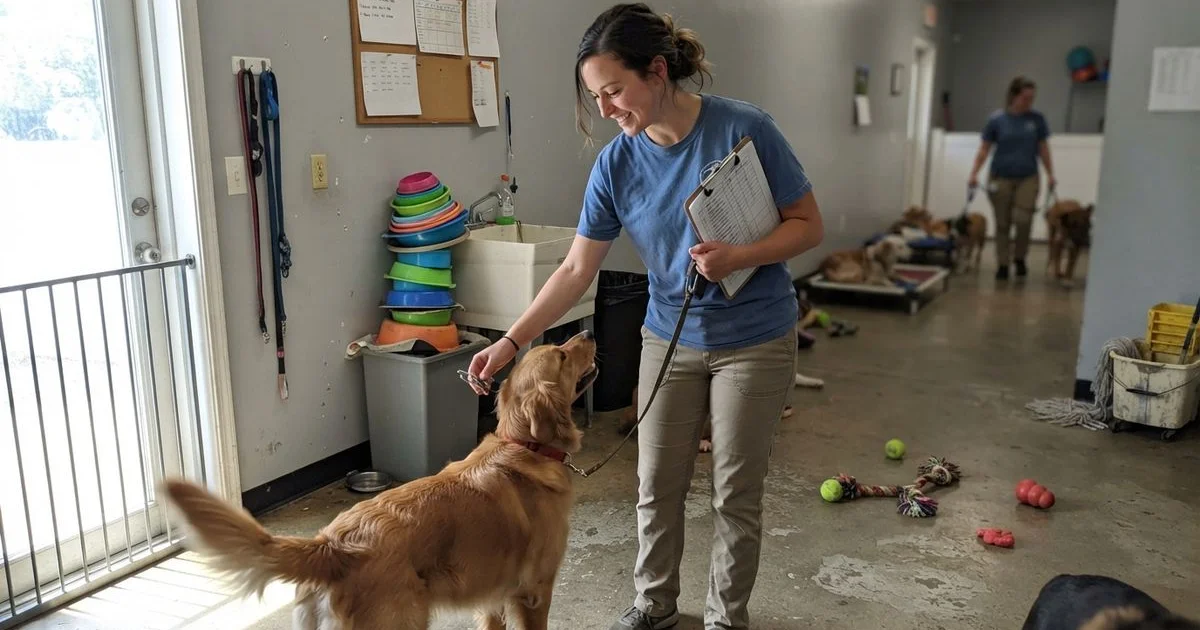
Group dog care works well most of the time, but it depends entirely on how closely a facility supervises play. Reviews across the Durham area point to a consistent pattern: when things go wrong, it’s rarely random. It’s usually a facility that skipped a step here.
Start by looking at what’s already listed for day care and boarding in Durham, then use the checklist below before you commit to any one center.
What to ask before you enroll
Staff-to-dog ratio. Ask how many dogs each staff member watches during open play, not how many total staff are on site. A facility with five employees but only one on the floor during play isn’t as covered as it sounds.
Play group matching. Good centers separate dogs by size, energy level, and sometimes age, rather than mixing a boisterous puppy with a nervous senior dog in the same room. Ask how groups are formed and whether your dog gets a trial or assessment day first.
Intervention policy. Staff should actively break up rough play before it escalates, not just watch and hope. Ask what the facility does the moment play looks tense, not just after an incident.
Illness and injury protocol. A center should be able to explain, without hesitation, what happens if a dog gets hurt or shows signs of illness during the day: who’s notified, how fast, and what documentation you’ll receive.
Space and cleanliness. Ask about outdoor play areas, especially size and how frequently they’re cleaned, since cramped or poorly maintained yards are a common source of complaints.
Format fit for your dog. Cage-free, open-play environments suit some dogs well but can overwhelm a dog who needs more downtime or a quieter setting. If your dog isn’t a natural fit for constant group play, ask whether the facility offers a smaller room, a slower pace, or scheduled rest breaks rather than one continuous open-play block all day.
Red flags worth taking seriously
| Red flag | Why it matters |
|---|---|
| Staff can’t answer basic ratio or group-size questions | Suggests the facility hasn’t thought through supervision |
| Reluctance to let you tour the actual play area | A center confident in its space usually shows it off |
| No formal incident report after an injury | Poor documentation often means poor accountability |
| Overcrowded play groups (well beyond 8-10 dogs per handler) | Harder to intervene quickly when something starts |
| Dismissive response when you raise a concern | A pattern, not a one-time bad day, is the real signal |
| Dogs crated for long stretches during open-play hours with no explanation | Worth asking directly why, since it may not match what was advertised |
If more than one or two of these show up during a tour or trial day, that’s reason enough to keep looking rather than talk yourself into it.
How to use a trial day well
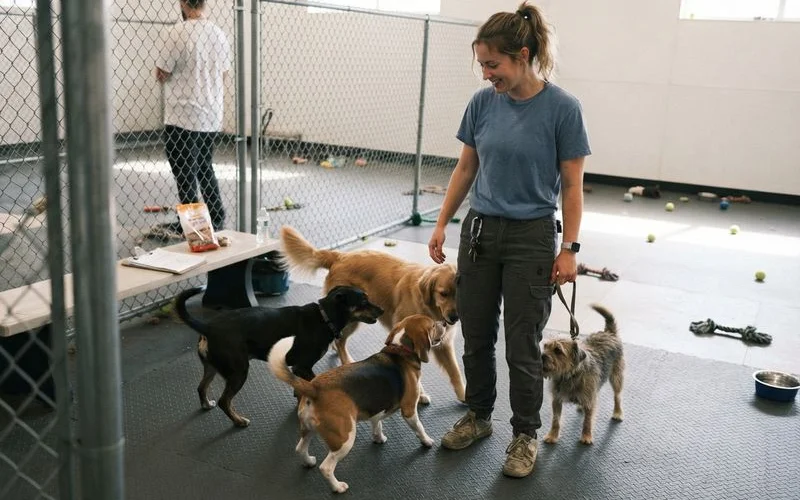
Most Durham centers offer some form of assessment or trial visit before regular enrollment. Treat it as your chance to observe, not just your dog’s chance to be evaluated. Ask to see the space, watch how staff move around the room during play, and request a debrief afterward on how your dog did and where they’d be grouped going forward. A center that gives you a vague, generic answer here is telling you something.
It’s also worth asking what happens on your dog’s very first day beyond the trial, since staff attention sometimes shifts once a dog is a known quantity rather than a new arrival being closely watched. If the facility can’t clearly describe how ongoing supervision differs, or doesn’t, from that first closely-watched visit, ask directly what a normal Tuesday looks like for a dog who’s been coming for a month.
What good looks like
The strongest signal isn’t a fancy lobby or a long list of amenities. It’s staff who can describe their supervision approach specifically and without prompting, who welcome you touring the space, and who treat questions about safety as normal rather than as a challenge. This is general guidance to help you evaluate a facility yourself; it isn’t a substitute for seeing the space and asking these questions in person before you enroll.
Once you’ve narrowed your list, compare your finalists’ reviews and ratings on the home page to see how they line up with what you observed on your tour, and check our methodology for how those rankings are built.
FAQ
- What's a safe dog-to-staff ratio at day care?
- There's no single legal number in North Carolina, so it varies by facility. Ask directly how many dogs each staff member supervises during open play, and whether that ratio changes during busy periods.
- How big is too big for a play group?
- Group size on its own matters less than how closely dogs are matched by size and temperament, and how many staff are actively watching, not just present in the room.
- Should I ask to see the play area before enrolling?
- Yes. A facility that hesitates to let you view the space where your dog will actually spend the day is worth a second look.
- What should I do if my dog comes home injured?
- Ask the facility for a written incident report and their account of what happened. A center with nothing to hide should document injuries as a matter of course, not treat the question as an accusation.
Related on this site
- Browse daycare & boarding providers
- Best daycare & boarding in Durham, NC →
- What dog day care costs in Durham and what changes the price
- What to expect on your dog's first day of day care in Durham
- Helping an anxious dog adjust to day care
- Returning to the office? How to get your dog ready for full-time day care
- All guides →