
What to expect on your dog's first day of day care in Durham
By Clara Tan · Updated 2026-05-26
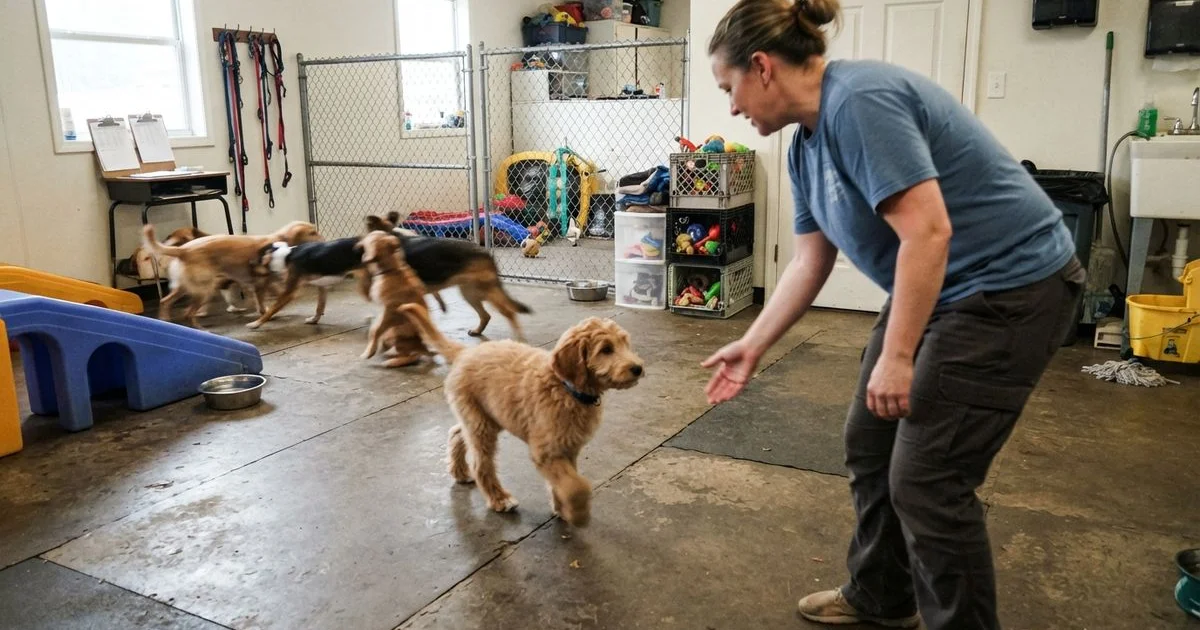
The first visit to a new day care is different from every visit after it. Staff need to learn your dog’s temperament before placing them in a group, and you need to see how the facility actually operates day to day. Knowing the general shape of that first visit in advance makes it less stressful for both of you.
Before you go
Every facility we’ve seen listed for day care in Durham requires proof of current vaccinations before a dog sets paw on the floor, and most ask for that documentation ahead of the visit rather than at the door. Call ahead to confirm exactly what they need, since requirements vary slightly by center. It’s also worth writing down anything unusual about your dog’s history: past reactivity, resource guarding around toys or food, or a strong fear of loud noises, so staff aren’t caught off guard mid-play.
What the assessment usually looks like
Most centers start new dogs with some form of temperament check rather than dropping them straight into the biggest group. A staff member typically introduces your dog to a small, calm group first, watches body language closely, and gradually expands the group size if things go well. This isn’t a pass-fail test so much as a way for staff to figure out which group your dog fits best.
Expect the first visit to run longer than a normal drop-off day. Staff are actively observing rather than just supervising a known group, and that takes time to do properly.
The intake conversation
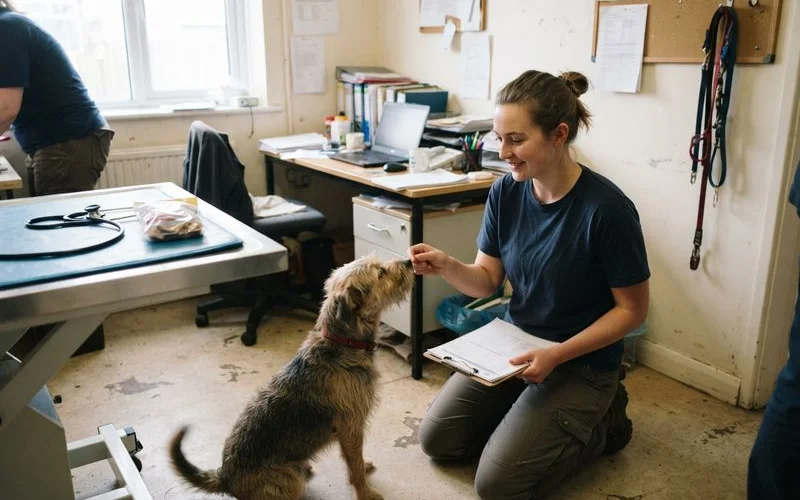
Before or during the first visit, a good facility will walk through a short intake conversation covering feeding schedule, any medications, known triggers, and your vet’s contact information. This is also your chance to ask the questions that matter to you: how groups are formed, what the daily schedule looks like, and how you’ll be updated if anything comes up.
Bring a written list rather than trying to remember everything on the spot. Drop-off mornings are often busy for staff too, and a clear note about your dog’s quirks, like resource guarding around toys or a habit of getting overstimulated near the door, gets communicated more reliably than something said quickly in passing.
What to pack for the first visit
Most centers ask for very little beyond paperwork, but a few things make the day smoother. Bring your dog’s regular food if the facility doesn’t provide it, especially if your dog has a sensitive stomach, along with any medication in its original labeled container. A leash and collar with current ID tags is standard, and some owners bring a favorite toy, though check the facility’s policy first since not every center allows personal items in shared play areas.
What a typical first day includes
| Step | What happens |
|---|---|
| Check-in | Staff confirm vaccination records and intake paperwork |
| Small-group introduction | Your dog meets a few calm dogs first, under close watch |
| Temperament observation | Staff note energy level, play style, and any tension |
| Group placement | Based on the observation, your dog is grouped with a compatible set of dogs |
| Rest periods | Most schedules build in downtime between active play blocks |
| Pickup debrief | A good center tells you how the day went, not just “fine” |
Settling in after the first visit
It’s normal for a dog to come home from their first day more tired than usual, sometimes a little more subdued than typical. That’s generally just a new-environment adjustment, not a sign something went wrong. Watch for how your dog acts over the next couple of visits rather than judging everything off day one; most dogs settle into a rhythm within their first two or three sessions.
If your dog seems unusually anxious or reluctant heading back for visit two or three, that’s worth a direct conversation with staff about what group they were placed in and how play went, rather than assuming day care isn’t a fit after a single rough day.
Once you’ve picked a facility and gotten through the first visit, you can compare your experience against other options on the home page or read more about how we rank facilities in our methodology.
FAQ
- Does my dog need to pass an assessment before starting day care?
- Most Durham centers run a temperament check on the first visit, usually a few hours of supervised play, to see how a dog reacts to other dogs and new people before placing them in a regular group.
- What should I bring on the first day?
- Proof of current vaccinations is the main requirement almost everywhere. Some centers also ask for your vet's contact information and any notes on feeding schedule, medication, or behavior triggers.
- How long does the first-day assessment usually take?
- It varies by facility, but plan for the visit to run longer than a typical drop-off day, since staff need time to observe your dog in a few different play scenarios.
- What if my dog doesn't pass the assessment?
- A center should tell you honestly if group play isn't a good fit and explain why, rather than placing an uncomfortable dog into open play anyway. Some offer one-on-one care or smaller group sizes as an alternative.
Related on this site
- Browse daycare & boarding providers
- Best daycare & boarding in Durham, NC →
- What dog day care costs in Durham and what changes the price
- How to spot red flags and check safety practices before choosing a dog day care
- Helping an anxious dog adjust to day care
- Returning to the office? How to get your dog ready for full-time day care
- All guides →