
A first-time owner's guide to puppy day care and socialization in Durham
By Clara Tan · Updated 2026-06-19
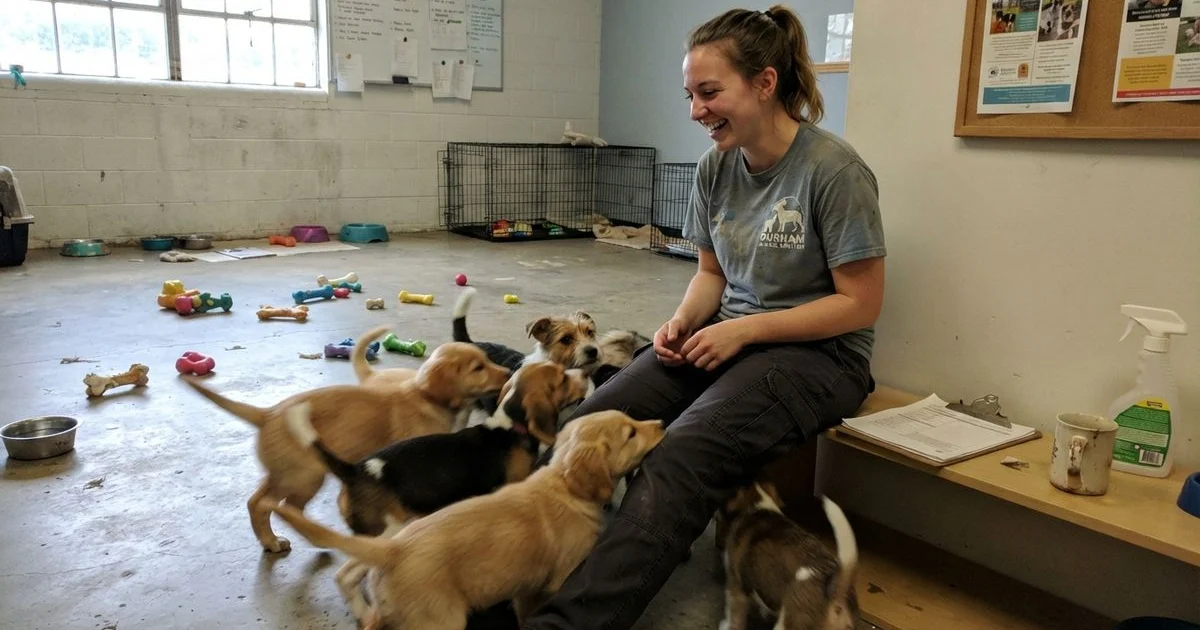
Bringing home a puppy comes with a lot of first-time decisions, and figuring out when and how to introduce group care is one of the bigger ones. Done at the right time and pace, day care and socialization can genuinely shape how a puppy grows up around other dogs and people. Done too early or too fast, it can backfire into fear instead of confidence.
Programs listed under puppy day care in Durham are generally set up specifically for this age group, with smaller, gentler play groups than a typical adult day care room.
When your puppy is actually ready
Most facilities wait until a puppy has completed their core vaccine series before allowing group play, both to protect your puppy and the other dogs in the room. Ask your vet exactly when your puppy’s schedule reaches that point rather than going by age alone, since vaccine timing can vary. Beyond the medical green light, look at temperament too: a puppy who’s curious and bouncy around new dogs is a different case than one who’s fearful or hides, and the second type may benefit from a slower, smaller introduction rather than diving into a full group.
Before that vaccine series is complete, some owners still want structured exposure to new experiences. Puppy-specific socialization classes are usually designed with this in mind, often held in a controlled indoor space with other vaccinated, health-screened puppies rather than an open general dog park, which lowers the exposure risk while your puppy’s immune system is still catching up.
What a good puppy program looks like
Age-appropriate grouping. Puppies play differently than adult dogs, with less body control and more unpredictable energy. A program that separates puppies into their own group, rather than mixing them with adult dogs, is generally safer and less overwhelming.
Gradual introduction. Look for a facility that starts new puppies with shorter sessions or smaller sub-groups before working up to a full day, rather than dropping a brand-new puppy straight into the busiest room.
Active supervision, not just presence. Puppy play can look rough even when it’s fine, and telling the difference between normal wrestling and a puppy getting overwhelmed takes an attentive eye. Ask how staff are trained to read puppy body language specifically.
Rest breaks built in. Puppies tire out faster than adult dogs and need real downtime during a long day, not just space to nap if they happen to stop moving.
Day care vs a socialization class
| Puppy day care | Socialization class | |
|---|---|---|
| Format | Ongoing supervised group play, usually by the day | Structured sessions, often weekly for a set number of weeks |
| Focus | General supervision and play while you’re busy | Specific exposure to new people, dogs, sounds, and situations |
| Typical use case | Regular care while you’re at work | A dedicated confidence-building program, often alongside basic training |
Many owners use both: day care for regular coverage, and a socialization class for more structured, guided exposure during the early months. Neither replaces the other.
Questions worth asking any puppy program
Beyond vaccine requirements, ask how the facility handles a puppy who seems overwhelmed mid-session, whether staff have specific experience with young puppies versus general dog handling, and how often puppy groups are reassessed as puppies grow and their play style changes. A puppy at four months plays very differently than the same dog at eight months, and a program that regroups puppies as they develop is generally paying closer attention than one that leaves a group static for months at a time.
Watching how your puppy adjusts
Expect an adjustment period over the first several visits. Some puppies dive in immediately; others take a few sessions to warm up, and that’s normal rather than a sign day care is the wrong choice. Watch for how your puppy behaves at home after visits: a tired, content puppy is a good sign, while ongoing anxiety, appetite changes, or reluctance to go back are worth a conversation with the facility about how sessions are going and whether a smaller group might help.
To see current puppy programs and reviews, start from the home page, and check our methodology for how listings are evaluated.
FAQ
- At what age can a puppy start day care?
- Most facilities wait until a puppy has completed their initial vaccine series, usually somewhere around 12-16 weeks, and check with your vet on timing since it depends on your puppy's specific schedule.
- Is puppy day care the same as a socialization class?
- Not quite. Day care is ongoing supervised group play during the day; a socialization class is typically a structured, shorter program focused specifically on exposure to new people, dogs, and situations.
- How do I know if my puppy is ready for group play?
- A puppy that's current on vaccines, generally curious rather than fearful around new dogs, and has had at least some positive exposure to other dogs is usually in good shape to start slowly.
- Should puppies be grouped separately from adult dogs?
- Yes, ideally. Puppies play differently than adult dogs, with less body awareness and more erratic energy, so a puppy-specific group tends to be safer and less overwhelming.